
We buy Jeeps so we can take them apart on sunny days. Doors off, freedom panels out, top down — that's what makes a Jeep a Jeep. It's also the weak link that leaves your cabin loud and wet.
The real reason you're here
Every other vehicle on the road (except Jeep Wranglers and Gladiators) has a rubber seal in two places: one on the door, and one on the body it presses against. Two surfaces meeting means a water/air tight seal. Jeep only installs the seal on the door. There's no matching weatherstrip on the body side, it's just bare metal — so when you close the door, the seal has nothing to compress against. That gap, all the way around your door openings, is where water and wind noise get in.
Every other vehicle has a seal on the body. Your Jeep doesn't. That, in one sentence, is the whole problem.
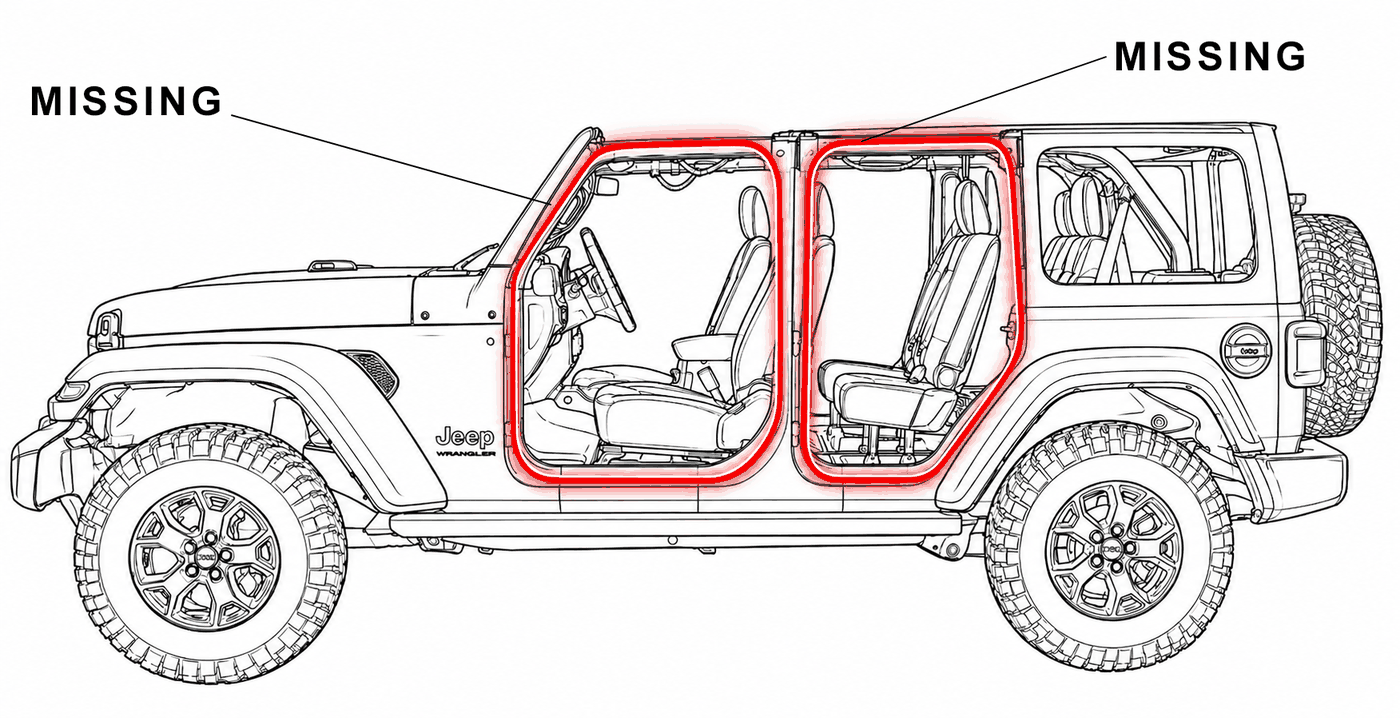
Here's the part nobody realizes (not even the dealer)
Your Jeep is loud and wet inside because Jeep “forgot” to install the part that keeps water and wind noise out — and once you understand that, the fix becomes obvious, and it's two steps, not a guess. Start with alignment: doors should close flush and the freedom panels should form a straight line across the windshield, because small misalignments funnel water straight in and let wind noise whistle through.
If you're still narrowing down exactly where yours is getting in, the Leak Guide walks through the most common entry points and the overlooked causes behind them — water and wind noise both.
Why the dealer keeps replacing the wrong parts
When a leaking Jeep rolls into a dealership, the standard move is to replace the door seals. I hear it constantly. But new door seals face the exact same issue the old ones did: there's still nothing on the body for them to seal against. Owners spend hundreds of dollars and the Jeep leaks just as badly the next time it rains — and it's just as loud on the highway the next morning. It's not that the dealer is dishonest — they're just treating the wrong half of the problem.
Where the water — and the wind noise — actually get in
It's almost always one (or several) of these spots, and they're the same places the wind noise comes from. If you've had either problem, I'd bet you recognize at least one:
- Windshield & A-pillar corners — water tracks down from the top of the frame
- Freedom panel edges — especially if they were reinstalled even slightly off
- The door-to-body junction — the classic mid-door drip, and the whistle you hear at speed
- Rear cargo door & glass — a bare metal tailgate with no seal to meet, so the back of the cabin roars
- Soft tops & Sunriders — track misalignment, not a torn top
- Sky One-Touch power tops — front-corner drips from the body gap, not the roof
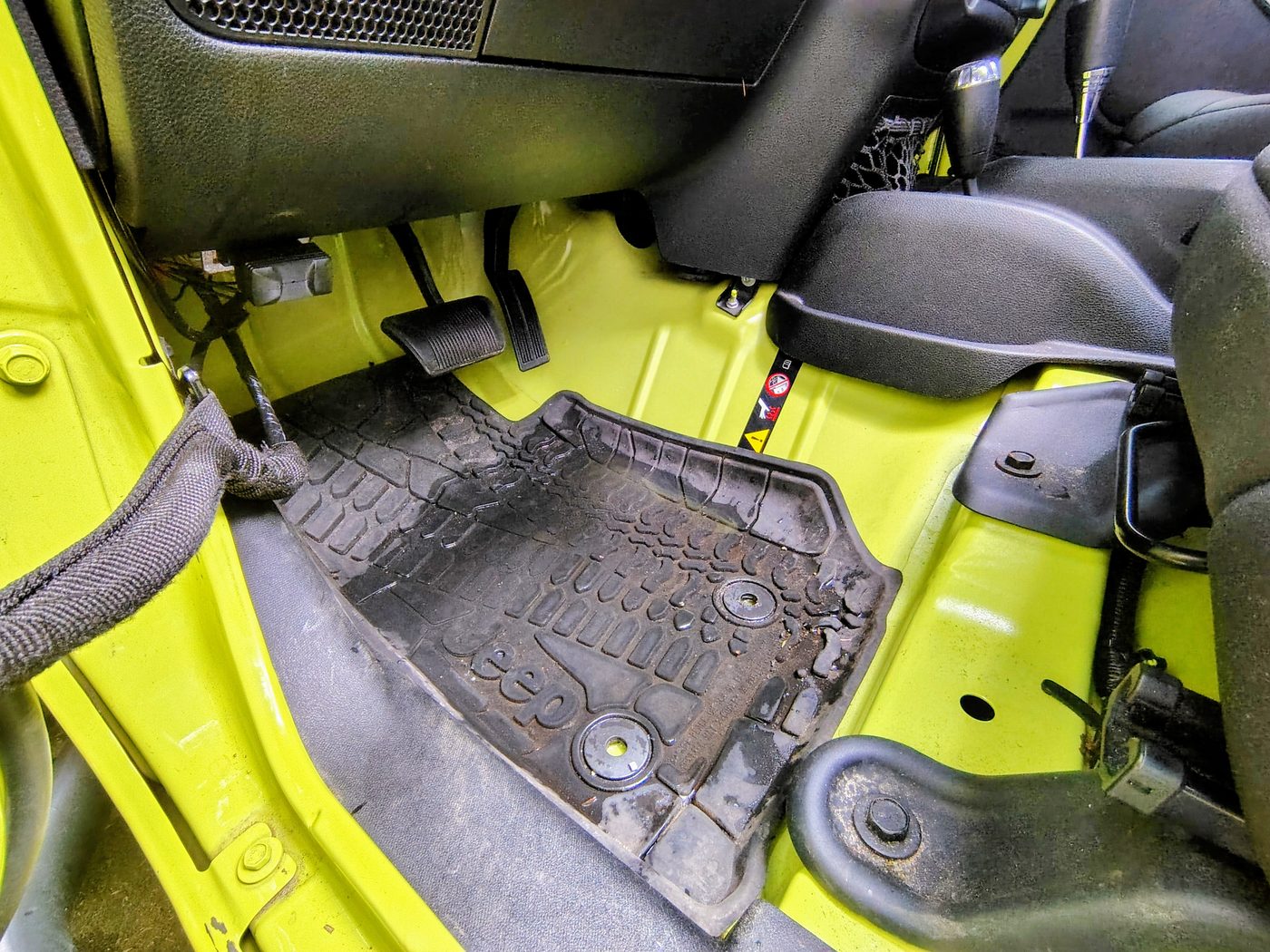
How to close the gaps that alignment alone can't
We've designed a Wrangler / Gladiator body-side sealing system that shows Jeep owners how to seal their ride like a submarine in an afternoon. Our body-side seal kit is manufactured in the USA and will finally give the door seals something to compress against instead of bare painted metal, so the gap closes for good. The result is a dry, quiet cabin.